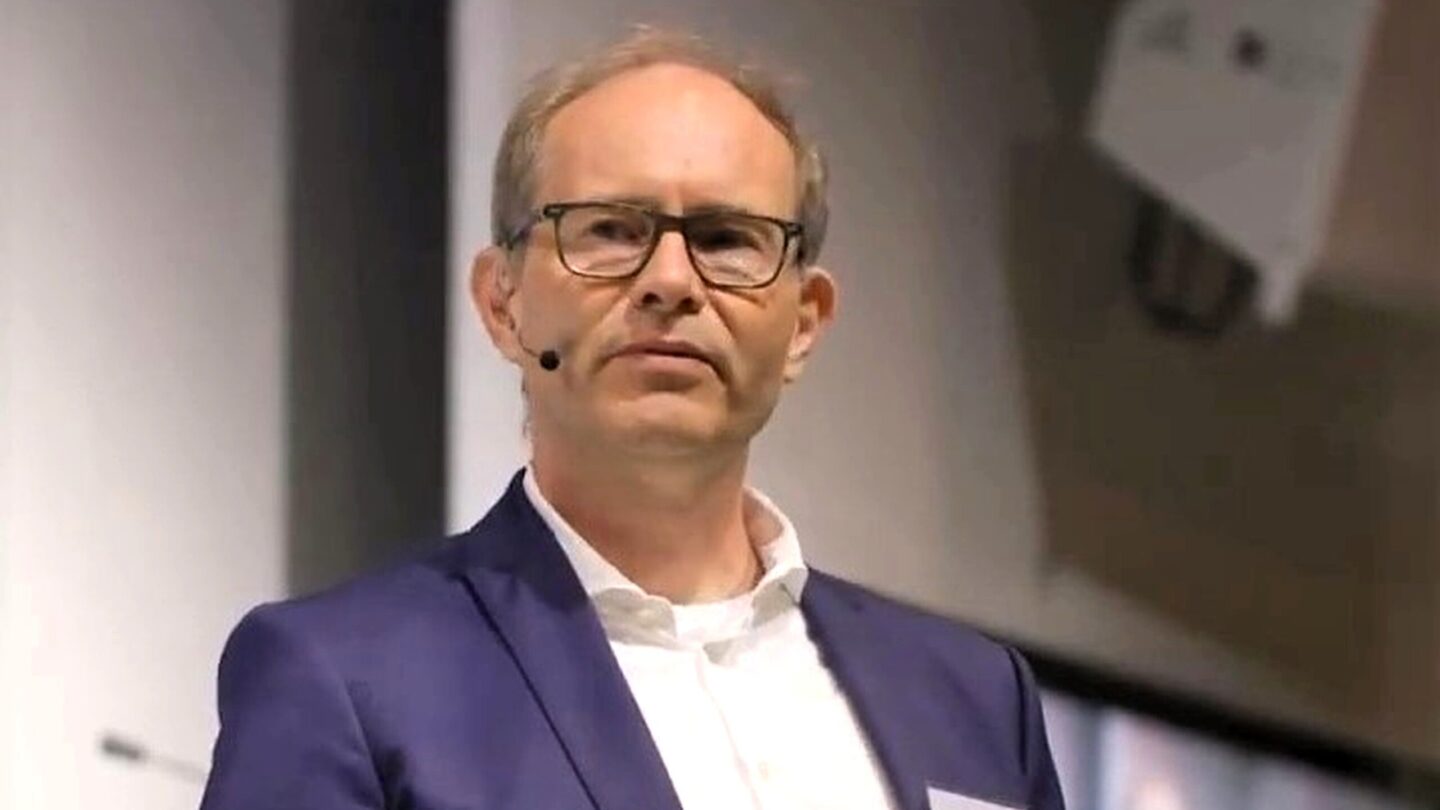
Watch the 25-minute keynote from the Conscious Leadership Summit, which received a standing ovation, or explore some of the key insights in the article below.
The panic
Let me start with a confession.
A few months ago, I had the opportunity to watch a live demonstration in which dozens of AI agents were collaborating. They coordinated with each other, challenged each other, and completed in minutes what entire teams had spent weeks on.
And I felt it, right here in my chest. Panic.
Not excitement. Panic.
I was thinking:
- What is coming our way?
- How do I keep up with this?
- Can I ignore it?
A few sleepless nights followed. And I think many of you know exactly what I’m talking about.
Take a moment: Thinking back over the last twelve months.
Has the pace of AI made you feel:
- energized,
- uncomfortable, or
- overwhelmed?
Every one of those responses is a completely understandable, human response.
But it’s an answer to the wrong question. Because subconsciously, we have all been asking: how do I keep up with AI?
That is the wrong question.
A human challenge, not a technology challenge
What took me from panic to clarity during those sleepless nights was this realization:
AI is not a technology challenge. It is primarily a human development challenge.
It will not be solved in our data centers. It will be solved inside of us.
When you think back to your own response just now, you weren’t really worried about technology. You were worried about yourself – your role, your relevance, your identity.
That’s the real question that kept me awake:
Who am I, if everything I thought defined my value can now be done by AI?
That’s not a technology question. It’s an identity question.
And when identity feels threatened, our brain reacts as if to a physical threat. We lose access to our intelligence and move into protection mode.
The necessary shift from our current identity to the one the future is asking for, that is the real work. Not just learning more tools.
Three shifts the future is asking for
- From knowing to sensemaking.
Knowledge used to be my power. That advantage no longer exists. Everyone has access to it. Today I need to join the dots that are already available to everyone, and sense what matters most in the current moment. - From predicting to navigating the unknown.
I used to chase certainty in order to make good decisions. But we are approaching technological singularity, and everything is becoming unpredictable. It is much wiser to build the muscle to move fearlessly in the dark – to learn how to navigate the unknown. - From doing leadership to being leadership.
No doubt, AI will replace or cover many of your current tasks. But how you show up as a leader: your presence, your integrity, your ability to listen – these are the reasons people will follow you. These are not soft skills. These are survival skills. And they have nothing to do with AI. They have everything to do with you.
Three brains
We have three brains.
The first, the intellectual brain, responsible for logic, analysis and strategy. It will be covered by AI completely, better than any of us. Unfortunately, this is the brain most of us have built our entire professional identity on.
The second brain is the heart. AI has no heart. This is what AI cannot do. It cannot sense that someone on your team is quietly breaking, or feel that the room needs to hear the truth instead of comfort.
The third brain is the gut, famous for its situational intelligence. The sudden feeling that this is the right person, or that something doesn’t add up here.
AI has an intellectual brain. It has no heart. It has no gut.
In a world of rising fear and lost meaning, especially for the younger generation, we need leaders who lead from all three brains. Not despite AI, but because of it.
Because when the entirety of human knowledge sits on your phone, the question is no longer whether you can create something.
The question is: what do I want to create, and from which inner state am I creating it?
A moment to pause
At this point in the talk, I invited the audience to close their eyes and take a few conscious breaths.
It is one thing to understand the difference between protection mode and growth mode in your head. It’s something very different to feel it in the body.
I asked them first to think of a change that had genuinely unsettled them in their life. Without analyzing it, just noticing what happens in the body, and where that feeling lives.
That is protection mode.
After a few more conscious breaths, the second part followed:
to think of one person whose life they had deeply touched. Not through their position, not through their expertise, but through who they are. A moment of full presence that made a difference. Again, noticing where that feeling lives in the body.
That is growth mode.
You might want to pause here yourself, before reading on:
- What comes to mind when you think of a change that unsettled you?
- What comes to mind when you think of a moment when your presence alone made a difference? Where in your body do you feel the difference?
What you feel in that contrast is not a concept. It is the most valuable data there is – because your body knows the difference between protection mode and growth mode long before your mind has shaped a single argument.
This human capacity to feel, to sense, to know from the inside, is not a soft skill. It is the most sophisticated intelligence on this planet.
What the data says
The world’s leading institutions are arriving at exactly the same conclusion. The World Economic Forum analyzed which leadership skills will matter most by 2030, and identified eleven core skills.
Eight of them are human-centered, heart and gut skills like self-awareness, empathy, resilience, creativity, curiosity.
The most powerful economic forum on the planet is telling us:
- The future does not belong to the most technically advanced leader.
- It belongs to the most consciously evolved one.
- The one who has fully embraced who they are: a human being.
And this data makes it even more urgent.
In our heads, we understand the importance of AI and want to capture its advantages. But more than 80% of AI projects are failing.
Not because the technology doesn’t work, but because people aren’t ready for it. They have not been developed for it. They have not shifted their identities yet.
And still, when you look at how companies allocate their AI budgets:
- 93% goes into technology and only
- 7% into developing people.
We are solving the wrong problem – collectively, and expensively.
Two futures
Picture two futures, both powered by AI.
On one side: fear, amplified by AI, used to control, to compete, to exploit. That’s the unconscious path.
On the other side: compassion, amplified by AI, used to connect, to explore new business territory in the blue ocean. That’s the conscious path.
Both futures are taking shape right now.
The technology is identical. The only difference is the state of the human mind behind it.
This is not about being pessimistic or optimistic about AI. It is about being conscious. Being conscious of what you create.
Because for the first time in human history, the bottleneck is no longer what you know.
The bottleneck is who you are.
A new identity
I want to offer you a new identity.
Not one as a manager of AI tools, not one as a survivor of disruption,
but as a conscious creator:
- Someone who leads from all three brains, amplified by AI.
- Someone who knows the difference between protection mode and growth mode.
- Someone who chooses, every single day, to create a world worth living in.
This is conscious leadership in the age of AI.
This is not a concept. It is a practice, a choice.
The future is in your hands.
The question is not whether you can be a conscious creator.
The question is whether you will choose to be one.